If you live in Pennsdale, you already drive Village Road on autopilot. The stone buildings are just there, the way the hills are just there. What most residents never quite piece together is that a single half-mile of that road holds one of the oldest continuously used places of worship in Lycoming County, at least three documented Underground Railroad safe houses, and a working bed and breakfast that used to sell pineapple pie. The village reads as ordinary because it has been quietly doing the same things for two and a quarter centuries.
This is a walk, not a tour. It's meant for the person who has lived here five years and still isn't sure which stone house is which.
Start with the stones
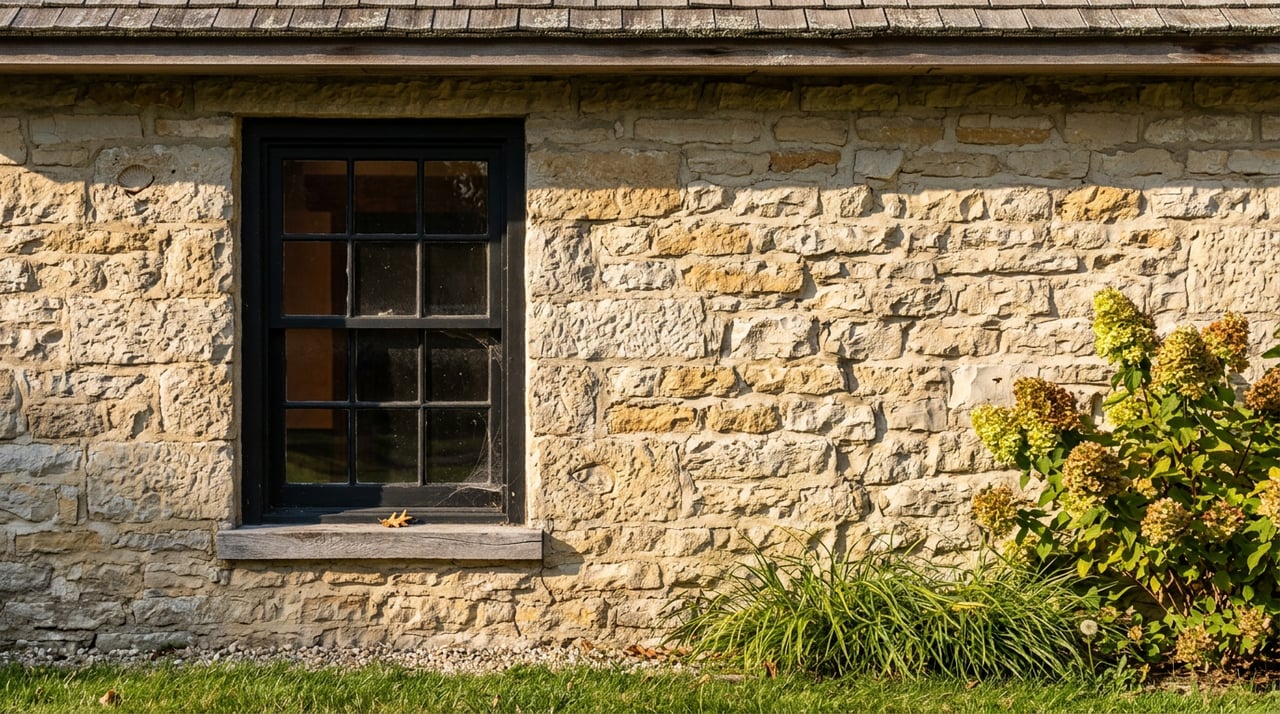
The Friends Meeting House at 443 Village Road was built at Pennsdale in 1799 from stones from a local quarry, and the current structure still stands as the longest continuing place of worship in the county. That's the headline fact. The one worth stopping for is smaller: fossils of sea creatures are still visible in the stones used to construct the building. Walk up close on a bright afternoon and you can pick them out in the wall.
The building predates almost everything else you can see from where you're standing. Quakers settled the only village in Lycoming County's Muncy Township, first known as Pennsville, later Hicksville, then Penn's Dale and finally Pennsdale, where they built a stone meetinghouse in 1799, and according to historian John F. Meginness the building succeeded a log structure that had been used for years as both a church and a schoolhouse on nearly the same site. Two centuries of instruction and worship, on one lot.
The Pennsylvania Historical and Museum Commission put a state marker at the site on May 1, 1947, per the state historical marker commemorating the Pennsdale Meeting installed by PHMC on May 1, 1947. That marker has been standing longer than most current residents have been alive, which is part of why nobody sees it anymore.
The house that was built to be confusing
A short walk from the meeting house is the building locals still call the House of Many Stairs. One of the most famous Underground Railroad stations in Lycoming County was in Pennsdale and was known as the House of Many Stairs, and at the time of its service to the Underground Railroad it was the Bulls Head Tavern owned by Edward Morris, serving as a stagecoach stop offering food, drink and lodging. That's the cover story. The design is the interesting part.
The House of Many Stairs had a unique construction: it was created from lime and fossil stone with a wooden roof and was built on a hillside, and this location resulted in the number of stairs that gave the house its nickname. This abundance of steps also helped to confuse any slave catchers who might be on the trail of runaway slaves. There were a number of hidden rooms that would further shelter any of the slaves, and there was a cubbyhole with a sliding panel at the head of one of the stairways that also was used for hiding.
Read that again. The staircases were the security system. A hillside site, cut into multiple half-levels, produces a floor plan a stranger cannot memorize on a first pass. Add a sliding panel at a landing and you have a house that works against anyone who doesn't already know where to look.
The stones themselves are worth noticing too. Lime and fossil stone, the same material family as the meeting house wall. Whoever built here was quarrying nearby and reusing what worked.
What's actually on Village Road
If you want to walk this in order, here's the sequence along Village Road and the immediate surroundings:
- Pennsdale Civic Center Social Hall, 261 Village Road. From I-180, take the 220 N exit at Exit 15 toward Pennsdale, then take 220 N approximately 0.3 mile and make a slight left onto Village Road; the Social Hall is on the left, 0.3 mile in. This is where the Muncy Historical Society has held its juried Artists Exhibition and Sale, drawing painters, potters, quilters, and metal workers from across Pennsylvania.
- Friends Meeting House, 443 Village Road. Stone, 1799, still an active unprogrammed meeting affiliated with Philadelphia Yearly Meeting.
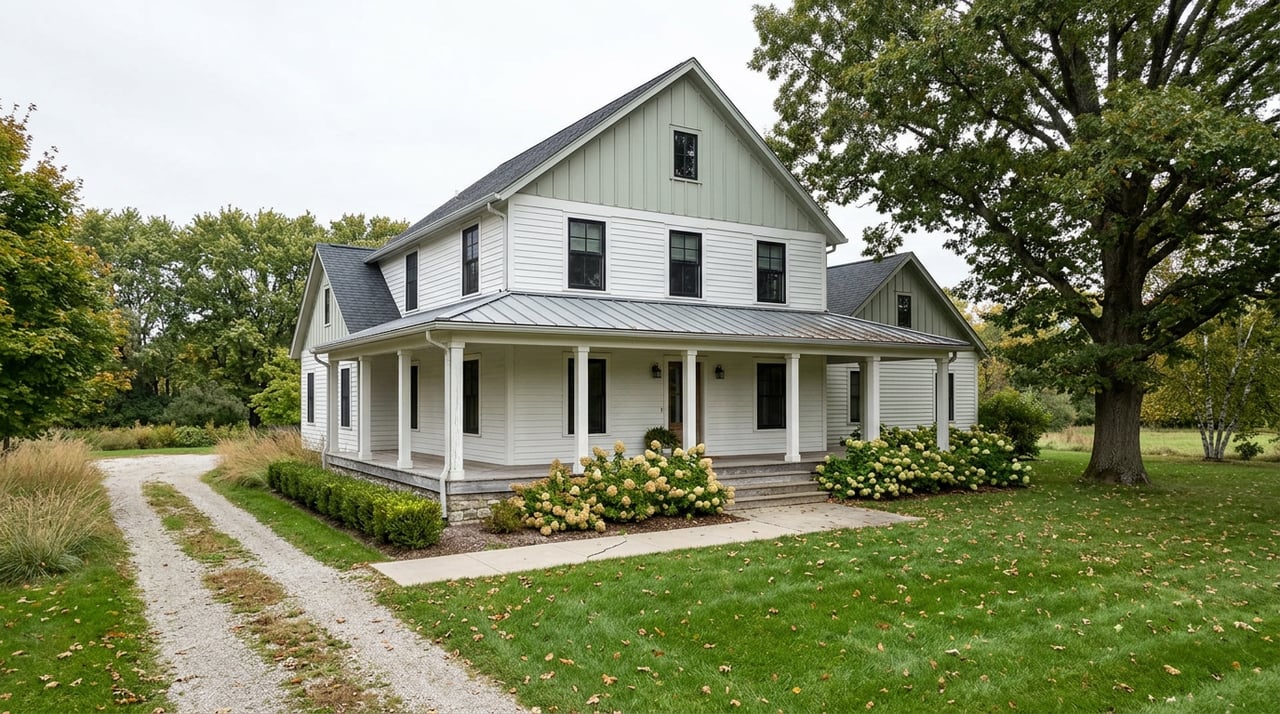
- Copper Roof Bed & Breakfast, 580 Village Road. Owners Leroy and Becky Bennett purchased the historical property once well known as the Weister Mercantile Store and formerly known as the Pineapple Pie Shop; the original house has undergone extensive renovations with a newly added large addition completed in 2010, and the Copper Roof has five bedrooms in the quaint village of Pennsdale.
- Wolf Run House and the Adlum House, just off the main corridor. The Adlum House, Wolf Run House, and Bulls Head Tavern (House of Many Stairs) were three of the homes used in the Underground Railroad.
That's the whole spine of the village. You could walk it comfortably in an afternoon, and if you brought a friend visiting from Williamsport, they would understand Pennsdale better than most residents do by the time you got to the Copper Roof.
The sheep story
Every village has a ghost story. Pennsdale's got repurposed.
There's stories about how at one time they had sheep in the cemetery out here, and they made bleating noises at night, and it was spooky. So the meeting house gained a reputation of being haunted. It kept the mercenaries who were looking for slaves away, so that at night time they could gather the runaways here and put them in the wagons, or wherever they were going to take them, to help them escape.
That's Mary Engel of the Pennsdale Meeting, quoted in the Williamsport Sun-Gazette's October 2024 feature on the 225th anniversary of the meeting house. The functional read is that a superstition wasn't merely tolerated by the Quakers running the operation, it was allowed to spread because it kept the property quiet at the hours it needed to be quiet. A haunted graveyard is a low-cost security perimeter.
Wolf Run House, home of Quaker William Haines, where three generations of the Haines family were involved in Underground Railroad activities, and from which the Quaker Meeting House in Pennsdale served as an assembly point for the runaway slaves to continue their travels north along the Genesee Trail into New York state and then into Canada, gave the operation additional infrastructure. The former home of Quaker William Haines has a hiding space in the corner of the third floor, and the basement has a walk-in fireplace with huge arches on each side that have hiding space, plus a bricked-up doorway that originally led from basement directly to outside, providing an additional escape route, and a tunnel opening in the basement led to outside the plaster and stonewall at the edge of the property.
Two buildings, both stone, both engineered with the same problem in mind. That's not coincidence. That's a village that made a decision.
Why the meeting house is not a museum
Here's the part that surprises people who grew up somewhere with a preserved historic district. Pennsdale's meeting house isn't a preserved artifact. An affiliate of Philadelphia Yearly Meeting, Religious Society of Friends, Pennsdale is an unprogrammed Meeting. People still sit in silence there on Sunday mornings. The 1799 Quakers probably met for like three hours; today the meeting is an hour.
That's the fact that reframes everything else on Village Road. These aren't buildings that survived. They are buildings that never stopped being used. The Copper Roof is renting rooms. The Civic Center is hosting art shows. The meeting house is holding meetings.
What to notice on your next drive-through
The next time you're on Village Road, whether you're picking up an art show ticket at 261 or just cutting through toward Muncy, three details are worth slowing down for:
- The fossil-shell impressions in the meeting house wall. They're easiest to spot in low winter sun.
- The way the House of Many Stairs sits into its hillside. If you didn't know the story, you'd read the site as awkward. Once you know it, the design reads as deliberate.
- The building at 580 Village Road. Look at the porch, the gazebo, the landscaping. The addition is from 2010. The bones are older than the state marker down the road.
Pennsdale is a small place. That's not a disadvantage when the small place has this much specific history packed into a walkable half-mile of one road. Most residents live here for years before anyone tells them what they're looking at. Consider yourself told.
If you're thinking about the value of an older stone home on a road like Village, or you own one and are curious what its story is worth in today's market, that's a conversation worth having with someone who works this specific corner of Lycoming County. Reach out to Century 21 Colonial Real Estate and we'll walk it with you.